What is this buzz about Meta*?
*Meta ≠ , the company in this article.
What is this buzz about Meta*?
*Meta ≠ , the company in this article.
I want to start this discussion with a fundamental question, "What is reality?". Each of us perceives this world through our lenses/mindset. We create our realities based on those perceptions. The brain collects information(stimulus) from different senses, finds the pattern, and builds reality based on internal models. Reality is whatever your brain tells you it is.
Most people assume that there’s an objective reality in which all of us exist, with facts that are universally true and more than just a matter of opinion. However, others argue that there is no such thing as objective reality, that everything is subjective, and that anything can be questioned or legitimately disagreed with, even facts that used to have a near-universal agreement. — Source
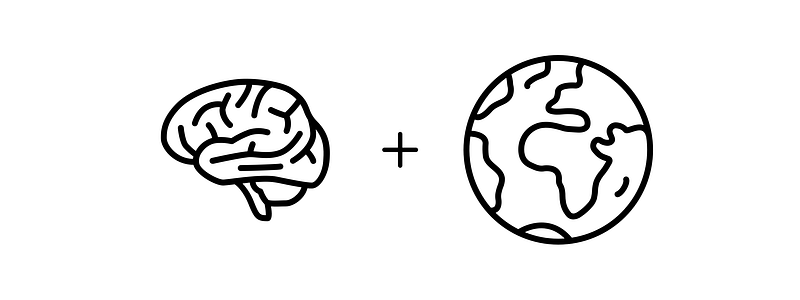
The world around us is an illusion constructed in our heads.
Metaverse means different things to different people. If someone says, they can define what metaverse is, they are probably lying. The word "Meta" comes from the Greek meaning "after" or "beyond." An Australian philosopher and cognitive scientist, David Chalmers, calls this Reality+ a physical reality combined with the metaverse of augmented and virtual realities. As the name suggests, it will be the next chapter of evolution.
Simulations are not illusions. Virtual worlds are real. Virtual objects really exist.
To understand what's beyond as part of evolution, we can examine the convergence of three things, our evolution as a species, the world, and the objects.
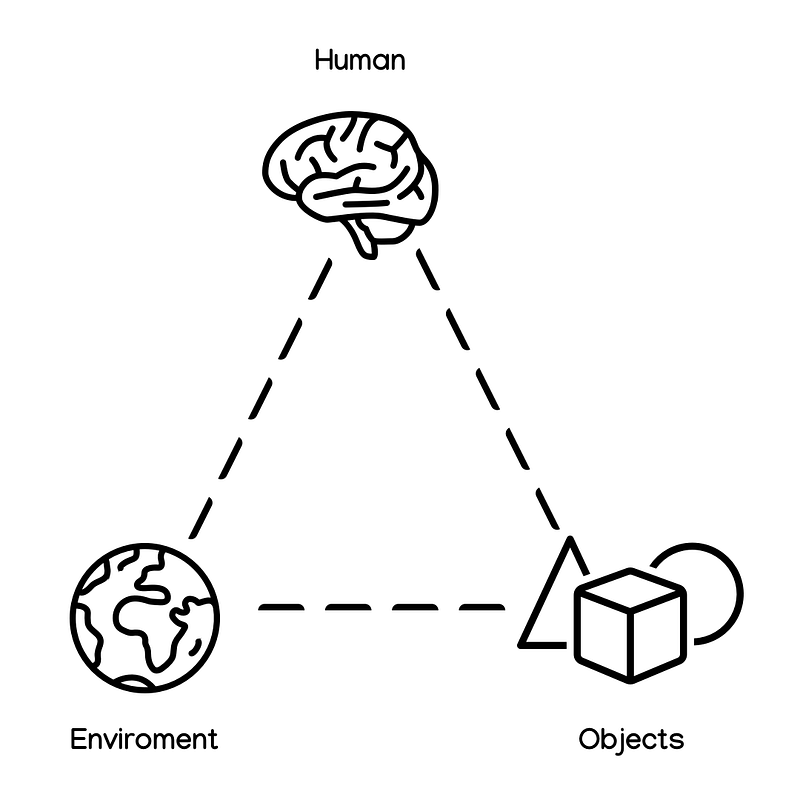
Our senses limit part of reality. But we are at a point in evolution where we are moving beyond our current senses. Already we can see how mobile phones have become our extended mind. An application like a calendar and video conferencing is helping us to move beyond our natural senses to manage and be conscious of things like time, distance, etc. Moving beyond, the extended mind would be more intuitive about how we fetch this information; rather than using multiple stimuli and responses, we would be able to access it like how we currently recall a piece of information from our brain.

Source: Unsplash
With these senses and the brain's power, we interact with the world (environment)and its objects. Let's focus on the environment first; the recent pandemic has played a significant role in shifting the mindset towards the environment zoom rooms replacing conference rooms. When we think about what's beyond zoom rooms, the next natural evolution would be an increase in the sense of presence and immersion where realistic avatars, holograms, and 3D spaces come into play. Similarly, if we take production houses, the green mats are replaced with virtual sets. We perceive these environments as real when we get immersed in these stories. It's just the beginning of a change in perspective on multiple things.
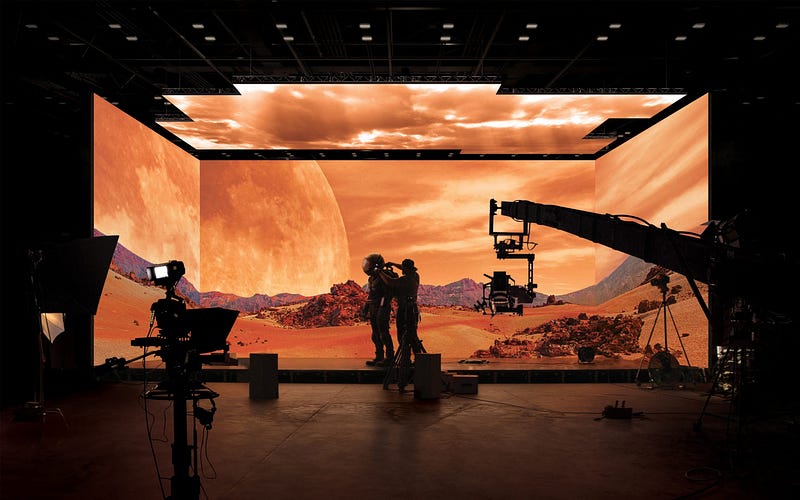
Source: Samsung
Similarly, the objects with which we interact also evolve. Now augmented reality headsets can replace the monitors; spatial headphones can replace the need for multiple speakers for a lively sound. Enhancement of these objects would play a vital role in creating our extended minds. One of the limitations in learning or training was the availability of these objects now. With VR headsets, students get enough time in the lab anywhere.

Source: Google
Information itself is the reality that matters.
We can see that meta is not a replacement for the internet. A transformed version builds iteratively upon it. Let us take a piece of information and see how it has evolved over a while. The recipe is a piece of information that has evolved over generations. From observation and recalling from memory, family recipe notes, recipe books, video recipes to the present age, augmented cook apps, IKEA cook posters to the future experience of learning to cook apps enhanced with a sense of smell, texture, and more. You can also see the circle connecting back to learning by using our senses, which clearly shows the disappearance of the physical-digital divide.

Source: Internet
With this mindset, let us look into the next generation of reality. Meta doesn't belong to a single person or company; it's a step to move the human civilization beyond.