Interactions #01
Josh Kinal and Sudhakar Damodaraswamy
Interactions #01
Josh Kinal and Sudhakar Damodaraswamy
As designers, we always try to define “design” and often the definition changes with time. This is part of one such journey to facilitate, interact with designers from varying backgrounds, diverse skillset to understand and redefine our definition of design. As John Green said, “In the end, what you do isn’t going to be nearly as interesting or important as who you do it with.”
I (Siddarth Kengadaran) and Sesha Devarajan started this journey by facilitating a conversation with Josh Kinal and Sudhakar Damodaraswamy as our first step in our journey. This was the first time both of them are meeting and we have documented the interaction between them and this blog is an extract of insights from their conversation. To experience the complete interaction watch the video below.
Things we learned from the conversation.
Evolution of Cognitive Ergonomics:
Cognitive ergonomics is the field of study that focuses on how well the use of a product matches the cognitive capabilities of users. It draws on knowledge of human perception, mental processing, and memory.
When computers came into the workplaces the focus was more on increasing productivity, making work faster, for instance, the typing speed which was more of the physical ergonomics of interacting with pixels. Where we used the Keystroke model, GOMS, etc. Later Gulf of execution, Seven stages of action which took the thinking that they are more than actions.
Is everyone a Designer?
Designers at least have to follow the principles whereas a non-designer picks and uses thumb rules. When you start using the principles you can even challenge them.
Everyone designs who devises courses of action aimed at changing existing situations into preferred ones.
Herbert A. Simon
But there is still an agent that distinguishes designers is that internalizing the principles and making the decisions not just for optimization but to push the limits.
The importance of design in innovation
“jugaad”a flexible approach to problem-solving that uses limited resources in an innovative way.
Jugaad is the purest form of Design where anyone who has the need to solve a problem with the available resources innovates. Designers add value to that innovation through refinement. Design is truth made real. There are levels of truth in what your building, for instance, I need this function so I build this thing but then you can refine that truth and find a pure form of its purpose.
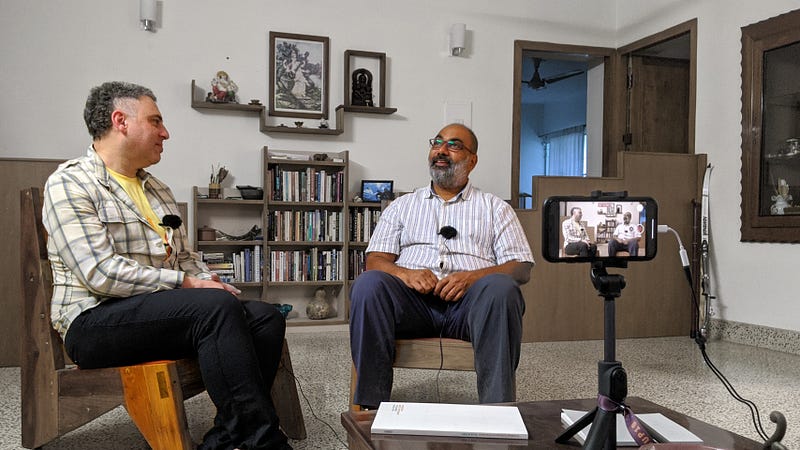
Behind the scenes