d ‘ Break
Key takeaways from the meet: Is Design Education Necessary?
d ‘ Break

Key takeaways from the meet: Is Design Education Necessary?
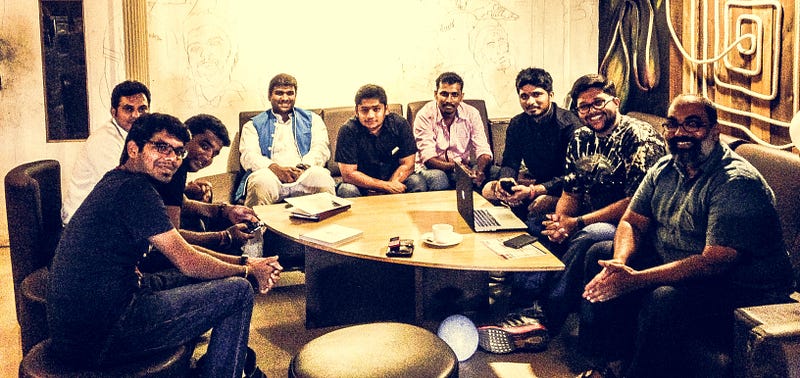
Well, all that you heard about the brewing stuff went pretty well. Thanks to all those who made it a memorable event. A lot of sharing happened over a cup of coffee. We’ve covered it all for you.
1. What are the areas that a person who has no education in design will have difficulty with and vice versa?
Vocabularies are important to get what you want, you cannot get which is in your mind from another without making him understand the way you think and want it. Design school can give you only the environment to learn it says Sudhakar Damodaraswamy of ‘D.J Academy’. He feels that Skill is easily learnt, beyond there, it is aptitude, the empathy that design school force you to learn, you can think different, you can cultivate the aptitude, above that there is sensibility in terms of aesthetics, interpersonal, communications where you can get formally taught but still it gives you only the environment to learn it. This is where the indirect learning happens when sitting in such environment.
2. How often should the syllabus be updated?
Though I am not a big fan of technology but still want to have an eye on it. This happens to everyone every time. Comparing it to 1987s, Sudhakar says that a lot of changes have happened over the years and there has been a lot of transformation in terms of sense and reference already.
3. In schools and colleges in India, the education method on designs is on a basic level. Students feel difficult when they step inside the industry. Why is it so?
The one thing in common we felt was that all design students seem to have a wrong perception with their attitude for they guard their talent with it. That actually keeps many mentors off from them which they never realize. When you go by the books, you actually question less and instead start borrowing the things around you to relate it to what you have learnt. Limiting yourself cannot let you explore beyond. Just getting known to tools cannot make you an expert in designs, it is way beyond the level of what you think it actually is.
I was lucky enough to be in Infosys when the V.P himself was a designer. This had a great impact in creating values for the company says Sudhakar.

4. Why the professor are not trained and updated to the current trends in the industry?
According to ‘The India Report’, the Student, Teacher ratio should be 1:1 but in the course of time when students became more than the teachers, everything appeared to be imbalanced. Not only that, there has to be a Teacher from every field to assist with their knowledge and experience which has become highly impossible these days. 2 lakhs to 3 lakhs application fall in now comparatively to 40,000 during 1987 for NID says Sudhakar.
5. What is the significance between design educations?
95% of people can reach to an extent but to bridge the world class level, an extra 5% of uniqueness is needed, that alone takes them to a whole new level. It is a cerebral part of level, instinct based aesthetics and sensibility beyond it. Only the right environment can make you learn it. To break the rules, you got to know it first. It’s a pretty deadly equation indeed.
6. Most of designer are self-taught and experience based designer, they generally don’t believe in design education. Your points for that.
In the Internet World where you have the opportunity to learn whatever you want just by a click, you don’t really need a design school for it. “I use the internet to evaluate my creativity level and improvise in terms of all the ways I can.” says Balaji from ‘Atma Studios’. However Sudhakar regrets for there is no proper evaluation system for it.
7. India is still a great place for designers?
One can look into ’The India Report’ from 1958 by ‘Charles Eames’ where one of his manifest carries the significance of ‘LOTA’, the most fascinating thing which from thousand years of evolution right from hydraulics, storage, focus, function, materials, aesthetics involved such a fine art. The report emphasized what Indians were capable of and what to follow in terms of the cultural influence.
8. Can design help solve social problems?
Don’t we get an opportunity to handle social problems like liquor ban through designs? asked Sathya ‘Founder of Digital Literacy Program’ to which Sudhakar commented ‘If you want less drinking in Tamilnadu you need to have a ten year plan since the solution sometimes is as big as the problems’, but Balaji still feels “If right team is engaged with proper brainstorming sessions, the power of solving many social problems will become easy.” He also quotes few successful campaigns which went noticeably well: Aids, Family Planning & Polio.
Also when Balaji asked about Conceptual Works from India, Sudhakar says Conceptual work in design is far ahead, that is something else, way beyond what we are thinking. Steve is an adopter of that. Steve is not a conceptual thinker, He is an adopter, He’s the guy who says let’s do it and puts his feet down. Steve is a unique phenomenal. There are no shortage of Jonathan Ive, the shortage is Steve Jobs since Steve Jobs is a difficult guy, that guy, a simple guy you know is just a kind of fortunate coincidence of forces that came together.
Overall, a high level of experimentation is needed for new things to happen. That is what we lack today, do not refrain yourself from experimenting. Try, repeat, until you get it right. Let’s build the Ecosystem together.
Cheers!
Author: RF @RajeshTheRF